Why Free-to-Play Prediction Market Games Are Becoming the Next Big Engagement Layer for Sports, Media, Brands, and Gaming Companies
Discover why free-to-play prediction market games are becoming a powerful engagement layer for sports leagues, broadcasters, media companies, brands, and gaming businesses. Learn how token economies, dynamic price movement, AI-generated markets, and leaderboards create repeat engagement — and how Vinfotech can build these solutions.

Introduction
For years, digital engagement teams have relied on familiar free-to-play formats such as polls, quizzes, bracket challenges, pick’em games, fantasy contests, spin-to-win mechanics, and one-time prediction widgets. These formats still have value, but many of them share the same limitation: they are exciting for a moment, and then the interaction is over.
A free-to-play prediction market game changes that dynamic.
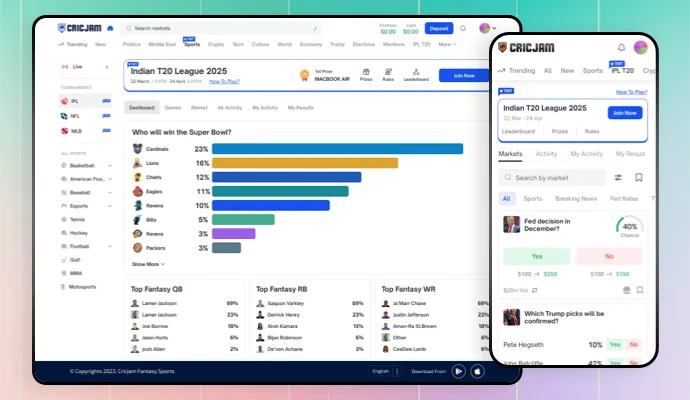
Instead of asking a user to simply make one static prediction and wait for the outcome, a prediction market game creates a live, evolving experience. Users can take positions on outcomes, see probability or price movement, change their position, exit early, enter again, diversify across multiple options, and compete on leaderboards using a token-based economy.
That is what makes it fundamentally different.
other free-to-play game. It is an interactive engagement layer that can sit on top of sports content, entertainment, news, cultural moments, branded campaigns, gaming ecosystems, and media properties.
At Vinfotech, we believe this category represents a major opportunity for customer-facing businesses that want more than just traffic. They want deeper participation, repeat sessions, stronger first-party data, richer sponsor inventory, and a more compelling user experience.
What Is a Free-to-Play Prediction Market Game?
A free-to-play prediction market game is an interactive digital experience where users use virtual tokens to take positions on the outcome of future events or questions.
These events can be related to:
-
Sports matches and player moments
-
Entertainment shows and celebrity topics
-
Politics and public affairs
-
Business or cultural trends
-
Gaming and esports events
-
Brand campaigns and community moments
Unlike a normal predictor game, the experience does not end after the user makes a pick. A prediction market game can include:
-
Binary markets such as Yes or No
-
Multi-outcome markets with several possible answers
-
Dynamic price or probability movement based on participation
-
Buy and sell mechanics so users can change their position
-
Portfolio-style play where users can hold multiple positions
-
Leaderboards and reward loops powered by a token economy
-
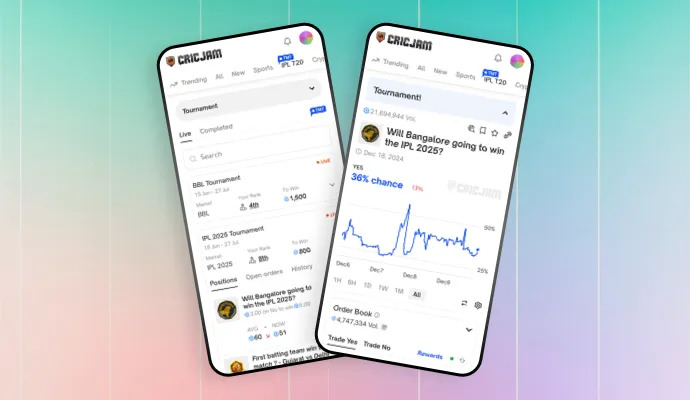
Graphs and market movement visualizations that make the experience feel alive
This creates a much richer and more engaging experience than a static poll or one-click predictor.
Why the World Is Excited About Prediction Markets
Prediction markets have moved from a niche concept to a mainstream topic of discussion. What began as a mechanism associated with finance, politics, and forecasting is increasingly being recognized as a broader interaction model.
The excitement comes from a simple idea: people do not just want to answer a question. They want to express conviction, see the crowd move, react to new information, and participate over time.
That is why prediction markets attract attention. They turn an event into a living system.
The same energy that has made prediction markets so interesting in public discourse can now be translated into a free-to-play, token-based engagement format for businesses.
This is where the opportunity becomes powerful.
Instead of using prediction markets only as a financial or speculative product, brands and platforms can use the same interaction model to create a more compelling engagement game for their users.
Why This Is Different From Traditional Free-to-Play Games
To understand why this model matters, it helps to compare it with the free-to-play engagement formats most businesses already know.
Traditional prediction games are usually static
In many older prediction or engagement formats, the user makes a prediction once and then waits. Examples:
-
Pick the winner
-
Predict the score
-
Choose the outcome of a vote
-
Fill a tournament bracket
-
Answer a poll
These formats can generate participation, but the interaction is often shallow after entry.
Prediction market games are dynamic
A free-to-play prediction market game changes the experience in several ways:
-
Users can take positions, not just make picks
A prediction market game turns an opinion into a position. That subtle difference creates much more involvement.
-
Prices or probabilities move over time
This gives users a visual and emotional reason to keep checking back.
-
Users can buy and sell
The game does not have to end with one decision. Users can exit early, reduce exposure, or take a new view.
-
Users can say Yes or No
In many predictor games, the only action is choosing the likely winner. In a prediction market, users can also take a contrarian view.
-
Multi-outcome markets become much more interesting
Users can spread their conviction, hold multiple outcomes, or react to changing probabilities.
-
The market graph becomes part of the product
The graph is not decoration. It is a core engagement surface. It makes the game feel intelligent, active, and alive.
-
The whole system feels like a living game economy
When combined with virtual tokens, daily rewards, streaks, and leaderboards, the product becomes something users can keep returning to.
That is why this category deserves to be called a prediction market game and not just another predictor.
The Core Engagement Layer: What Makes This Model Powerful
The real power of a token-based prediction market game is not just in one mechanic. It is in the way several mechanics reinforce each other.
-
Token economy
Users receive virtual tokens through signup bonuses, daily check-ins, promotions, rewards, or admin funding. This creates a low-friction way to enter the experience.
-
Dynamic markets
Markets are always active. The user is not just watching an outcome; they are watching an evolving probability story.
-
Buy and sell flexibility
Users can enter, exit, re-enter, or reposition. That is a huge difference from one-time predictors.
-
Binary and multi-outcome play
The product is versatile. It can support simple Yes or No markets as well as richer multi-option markets.
-
Leaderboards
Competition makes the game socially interesting. Some users play for accuracy, some for ranking, some for status, and some for fun.
-
Repeat engagement loops
Daily token claims, streak rewards, market updates, new questions, and leaderboard movement keep users coming back.
-
First-party behavioral data
Every interaction reveals preferences, interest clusters, conviction levels, and participation patterns.
-
Visual depth
Probability charts and movement graphs make the experience feel more advanced than a standard fan engagement widget.
Why This Can Be a Painkiller and Not Just a Nice-to-Have Feature
A lot of engagement products are interesting, but not urgent.
This model becomes much more compelling because it can solve real business problems.
For sports leagues and teams
The pain is often:
-
Fans engage only around the match
-
Second-screen attention is fragmented
-
Sponsor activations feel repetitive
-
There are limited opportunities for always-on interaction
-
Owned platforms need more repeat visits
A free-to-play prediction market game can help by turning every match, series, transfer rumor, player milestone, or tournament storyline into interactive participation.
For broadcasters and media platforms
The pain is often:
-
Viewers are passive
-
Session depth is low
-
Attention is split across multiple screens
-
Content needs stronger interaction hooks
-
Editorial teams need new formats that keep audiences involved
A prediction market game can sit alongside live or scheduled content and give users a reason to participate throughout the lifecycle of an event.
For media companies and publishers
The pain is often:
-
Stories are read and forgotten
-
Competition for attention is intense
-
Publishers need stronger repeat behavior
-
Audiences want participation, not just consumption
A prediction market layer turns content into an ongoing interaction.
For brands
The pain is often:
-
Campaigns struggle to build repeat interaction
-
Branded content is consumed passively
-
Community programs need stronger participation mechanics
-
Sponsorships need more measurable digital engagement
A free-to-play prediction market game can turn a brand campaign, sports sponsorship, entertainment tie-in, or community initiative into a more dynamic experience.
For gaming and esports companies
The pain is often:
-
Vsers need reasons to return between core gameplay loops
-
LiveOps requires fresh hooks
-
Community events need richer participation
-
Esports and content ecosystems need second-screen mechanics
A token-based prediction market layer can become a valuable companion engagement system.
Why This Matters for Sports Leagues and Teams
Sports is one of the most natural fits for a prediction market game.
There is already emotion, tribal loyalty, uncertainty, momentum, debate, and community. That makes the category ideal for dynamic predictions.
Sports use cases
Examples of sports prediction market game ideas include:
-
Will Team A win tonight?
-
Will Player X score in the next game?
-
Which player will be man of the match?
-
Will the total score go above a threshold?
-
Which team will top the group stage?
-
Which transfer rumor will become official first?
-
Which young player will break out this season?
Why it works for sports fan engagement
A sports fan does not want only content. They want involvement.
A prediction market game makes the fan experience more participatory by adding:
-
Anticipation before a match
-
Decision points during the buildup
-
Discussion around probability movement
-
Replay value across the season
-
Competition with friends or the wider fanbase For leagues and clubs, this can mean:
-
Higher repeat visits
-
More sponsor-friendly engagement inventory
-
Better first-party data
-
Richer fan segmentation
-
Stronger owned-platform value
Why This Matters for Broadcasters and OTT Platforms
Broadcasters are trying to make viewing more interactive without overwhelming the core content experience.
A prediction market game is a natural second-screen format.
Broadcaster use cases
Examples:
-
Will the home team score next?
-
Which contestant will survive elimination?
-
Which debate topic will dominate the night?
-
Will a specific event happen before halftime?
-
Which player will have the biggest impact today?
Why it works for broadcasters
This model helps turn viewers into participants. Instead of passively watching, users can:
-
Form an opinion
-
Act on that opinion
-
Watch the probability move
-
Return to manage positions
-
Compete with others
For broadcasters, that can improve:
-
Session depth
-
Return frequency
-
App retention
-
Ad or sponsor integration opportunities
-
Audience insight
Why This Matters for Media Companies and Publishers
Media companies today are under pressure to make content more interactive, more valuable, and more memorable.
A free-to-play prediction market game can help transform content from something users consume once into something they return to and follow over time.
Media use cases
Examples:
-
Which movie will win the biggest award?
-
Will a proposed policy pass this month?
-
Which celebrity rumor will become true?
-
Which cultural trend will break out next?
-
Which startup theme will dominate this year?
Why it works for media engagement
Media is full of unresolved questions. That makes it ideal for interactive markets. This model can help publishers:
-
increase session duration
-
encourage return behavior
-
surface audience interests
-
create editorially aligned gamification
-
turn content into community conversation
Why This Matters for Brands and Sponsored Campaigns
Brands are always looking for ways to create memorable, participatory digital experiences. The challenge is that many branded games are shallow, temporary, and disconnected from what the user actually cares about.
Prediction market games are more compelling because they can be tied to topics users already follow.
Brand use cases
Examples:
-
Which product feature will be most loved?
-
Which campaign moment will trend highest?
-
Which athlete or celebrity partner will perform best this weekend?
-
Which community challenge outcome will happen first?
Why it works for brands
This model can help brands move from passive reach to active participation. It also opens up opportunities for:
-
Gamified campaign journeys
-
Loyalty programs powered by tokens
-
Sponsor-backed leaderboards
-
Data-rich community interaction
-
Differentiated event or moment marketing
Why This Matters for Gaming Companies and Esports Platforms
Gaming companies already understand the value of loops, rewards, competition, and LiveOps. A prediction market game fits naturally into that ecosystem.
Gaming use cases
Examples:
-
Which team will win the next esports matchup?
-
Will a new feature be the most used this season?
-
Which character or weapon will dominate the meta?
-
Which streamer challenge will be completed first?
-
Which in-game event will users prefer most?
Why it works for gaming engagement
A prediction market layer can:
-
Complement LiveOps
-
Add community interaction
-
Create a return loop outside the core game
-
Reward prediction skill and participation
-
Support seasonal events and special campaigns
For gaming companies, it can become a retention and reactivation tool that deepens the community layer.
The Role of Personalization: Why Interest-Based Markets Matter
The strongest version of this product is not a generic list of markets. It is an interest-driven engagement engine.
That means markets should be created around topics users already care about. Examples:
-
Favorite teams
-
Favorite competitions
-
Entertainment genres
-
Preferred media verticals
-
Political and cultural topics
-
Brand communities
-
Gaming ecosystems
This is what makes the product feel personally relevant instead of mechanically impressive.
If the question is aligned with the user’s interest, the chance of participation rises sharply.
The Role of AI: Why AI Market Creation Is a Game Changer
One of the biggest hidden problems in engagement products is content operations. Even when the engagement mechanic is strong, many companies struggle with:
- Deciding what questions to create
- Creating enough of them fast enough
- Keeping content fresh every day
- Tailoring content to audience segments
- Doing all of this without a large manual team
This is where AI market creation becomes a major differentiator. An AI-powered market creation layer can help operators:
-
Generate market ideas from live events, schedules, or content calendars
-
Create binary and multi-outcome market questions quickly
-
Tailor markets to specific audience segments
-
Generate titles, descriptions, categories, and tags
-
Recommend which markets are likely to drive participation
-
Help editorial or campaign teams scale their output
This turns the product into more than a game mechanic. It becomes a scalable engagement system.
What a Strong Free-to-Play Prediction Market Platform Should Include
To deliver real engagement value, the product should go beyond basic question setup.
Core product components
A strong platform should include:
-
Token wallet and token economy rules
-
Binary and multi-outcome market creation
-
Dynamic price movement using an algorithmic pricing model
-
Ability to buy and sell positions
-
Portfolio and position view for users
-
Market movement graphs
-
Leaderboard system
-
Reward and streak mechanics
-
Interest-based personalization
-
AI-assisted market creation
-
Admin controls for funding, market setup, settlement, and reporting
-
Analytics and engagement reporting
At Vinfotech, these are the kinds of product layers we think about when building engagement systems that go beyond novelty.
Why This Is Good for First-Party Data and Audience Insight
One of the most valuable aspects of a free-to-play prediction market game is that it reveals more than a click.
It tells you:
-
What topics a user cares about
-
What categories they return to
-
How often they participate
-
How confident they are in different types of questions
-
How they behave over time
-
Which campaigns or markets actually create stickiness
For businesses that want deeper customer understanding, this becomes a meaningful source of first- party data.
That is especially relevant for sports properties, media platforms, and brands trying to build direct relationships with their audience.
Why This Is Not Just Another Gamification Layer
Many gamification products rely on points, badges, streaks, or spins layered on top of passive content.
This is different.
A free-to-play prediction market game is not just a rewards wrapper. It is a decision-driven engagement system.
The user is making choices, reacting to change, managing a token balance, and navigating a moving market.
That creates a much deeper sense of participation.
In other words, this is not just another free-to-play game. It is a more advanced interaction model for digital engagement.
How Vinfotech Can Help Build Free-to-Play Prediction Market Solutions
At Vinfotech, we build interactive engagement products for sports, media, gaming, and digital businesses that want stronger user participation.
A free-to-play prediction market game is a natural extension of that expertise. We can help businesses build solutions that include:
-
Token-based virtual economies
-
Binary and multi-outcome market systems
-
Dynamic pricing and probability movement
-
Beautiful market graphs and UX flows
-
Buy, sell, and portfolio mechanics
-
Leaderboard and reward systems
-
AI-based market creation and management tools
-
Admin panels for content operators
-
Responsive web and mobile-ready experiences
-
Integrations with feeds, schedules, campaign systems, and analytics
Most importantly, we do not see this as a generic clone exercise. We see it as a customizable engagement product that can be shaped around the audience, content type, and goals of each customer.
That means the same core engine can be adapted for:
-
Sports fan engagement
-
Broadcaster second-screen experiences
-
Publisher participation layers
-
Brand activation games
-
Gaming and esports community engagement
The Bigger Opportunity: Prediction Market Games as an Always- On Engagement Layer
This is where the real business opportunity lies.
A free-to-play prediction market game is not just a campaign microsite idea. It can become an always- on engagement layer across the year.
That is powerful because businesses increasingly want:
-
More reasons for users to return
-
Stronger session depth
-
Better audience insight
-
More sponsor inventory
-
More community participation
-
Scalable interactive content creation
Prediction market games can help provide all of these when designed well.
Final Thoughts
The world is excited about prediction markets because they make uncertainty interactive. That same excitement can now be translated into a business engagement model.
For sports leagues, broadcasters, media companies, brands, and gaming businesses, the opportunity is not simply to launch another free-to-play feature. The opportunity is to launch a more dynamic, more participatory, and more intelligent experience that users want to come back to.
That is why free-to-play prediction market games are worth paying attention to. They combine:
-
The thrill of taking a position
-
The visual depth of live probability movement
-
The flexibility of buying and selling
-
The retention loop of a token economy
-
The competition of leaderboards
-
The scalability of AI-generated market creation
When these elements come together, the result is not just another game. It is a new engagement layer.
If your business is looking for new ways to turn passive audiences into active participants, prediction market games may be one of the most exciting formats to explore next.
And if you want to build such a solution with the right product thinking, mechanics, and customization, Vinfotech can help.
FAQs
What is a free-to-play prediction market game?
A free-to-play prediction market game is a token-based interactive experience where users take positions on future outcomes, see live price or probability movement, and can often buy, sell, or manage their positions over time.
How is a prediction market game different from a normal predictor game?
A normal predictor game is usually static and ends after the user makes one choice. A prediction market game is dynamic. It allows users to react to changing information, view live movement, manage positions, and participate more deeply.
Can prediction market games be used for fan engagement?
Yes. Prediction market games are highly relevant for fan engagement in sports, entertainment, media, and community-driven experiences because they turn audience interest into active participation.
Can brands use prediction market games for engagement campaigns?
Yes. Brands can use prediction market games as part of sports sponsorships, product launches, entertainment partnerships, loyalty programs, and community campaigns.
Why is AI useful in a prediction market platform?
AI can help operators generate relevant market ideas, organize them by category, tailor them to different audiences, and keep the experience fresh without requiring a large manual content team.
Can Vinfotech build a custom prediction market engagement platform?
Yes. Vinfotech can help design and build custom free-to-play prediction market solutions with token economies, dynamic pricing, leaderboards, AI-assisted market creation, and tailored user experiences for different industries.
About Vinfotech
Vinfotech builds world-class prediction market solutions like Kalshi or Polymarket. Our proven core engine features battle-tested mechanics with AMM and order book support at a production-ready scale. Whether you need white label or full source code, we provide full customization to meet your specific compliance and operator needs. We also do enterprise prediction markets for internal forecasting. Contact Us today for a demo.

for subscribing to our newsletter.
What does it cost to build a prediction market platform in 2026? Discover pricing across white-label solutions...
Understand the difference between a prediction market and a betting platform in simple language. ...
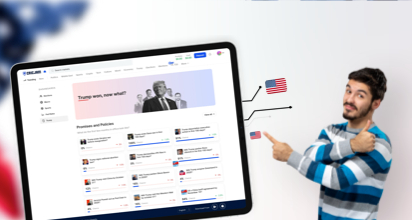
Exploring the US prediction market opportunity? Learn what serious operators should look for in a...
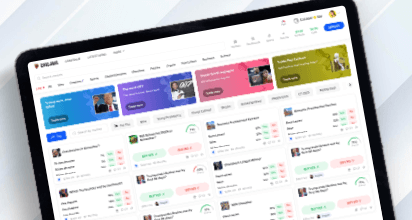
Launch your prediction market business with a white label platform. Get scalable, customizable prediction mark...


