Building a US-Ready Prediction Market Platform: The Right Technology Partner for Teams Navigating CFTC Requirements
Exploring the US prediction market opportunity? Learn what serious operators should look for in a technology partner while navigating CFTC requirements, product readiness, controls, integrations, and long-term platform ownership.

The US prediction market opportunity is real, but so is the complexity
For serious operators, the United States is one of the most important markets in the world for prediction market platforms. Interest in event contracts, market-based forecasting, and exchange-style user experiences has grown sharply. More founders, brokers, fintech teams, media companies, and trading- focused businesses are now exploring how to build a US-ready prediction market platform that can serve this market properly.
But once a company moves beyond early curiosity, the conversation changes quickly. It is no longer only about launching fast or putting together a simple front end. It becomes a question of market structure, platform ownership, product flexibility, operational controls, reporting, surveillance, integrations, and the technology decisions needed when a team is navigating CFTC requirements.
That is where the choice of technology partner starts to matter.
This blog is not intended to be a legal guide to CFTC rules, and it is not a deep educational piece on regulation. Companies pursuing this path usually already understand that legal and regulatory work must be handled with the right advisors. The real question here is different: when your team is serious about building a prediction market product for the US market, what kind of technology partner should you choose?
There are multiple ways to enter the market, and that is perfectly valid
Not every company needs to start in the same way. For some teams, integrating with existing market infrastructure, consuming APIs, or using another operator’s rails may be a sensible place to begin. That route can help validate demand, test user behavior, and move faster in the early stages.
There is nothing wrong with that approach.
At the same time, many companies eventually realize that a lightweight integration is only one part of the journey. As the business becomes more serious, questions arise around flexibility, product differentiation, branding, contract configuration, admin control, fee logic, market setup workflows, user experience, reporting requirements, and long-term platform ownership. A company that wants to build a
durable asset in the US prediction market space often needs more than access to someone else’s system.
That is why many serious operators begin looking for a prediction market technology partner who can work with them as the business matures.
Why the technology partner matters so much in a CFTC-facing journey
When teams talk about launching a prediction market platform in the United States, it is easy to focus only on the visible layer: the markets, the charts, the buy and sell flows, the order book, or the settlement experience. But a US-ready prediction market platform is much more than that.
The technology foundation has to support the way the business will actually operate. That includes how markets are created, how contracts are structured, how users are onboarded, how trading logic behaves under load, how audit trails are maintained, how data is exposed to internal teams, how surveillance or monitoring can be layered in, and how the platform can evolve as regulatory, operational, and commercial needs become clearer.
A good technology partner does not replace legal counsel, compliance advisors, or regulatory specialists. Instead, the right partner makes sure the product and engineering side is not the weak link in the journey. They help ensure that when your legal and compliance teams define requirements, the platform is capable of adapting to them.
That is a very different promise from simply delivering a generic front end or a basic white-label shell.
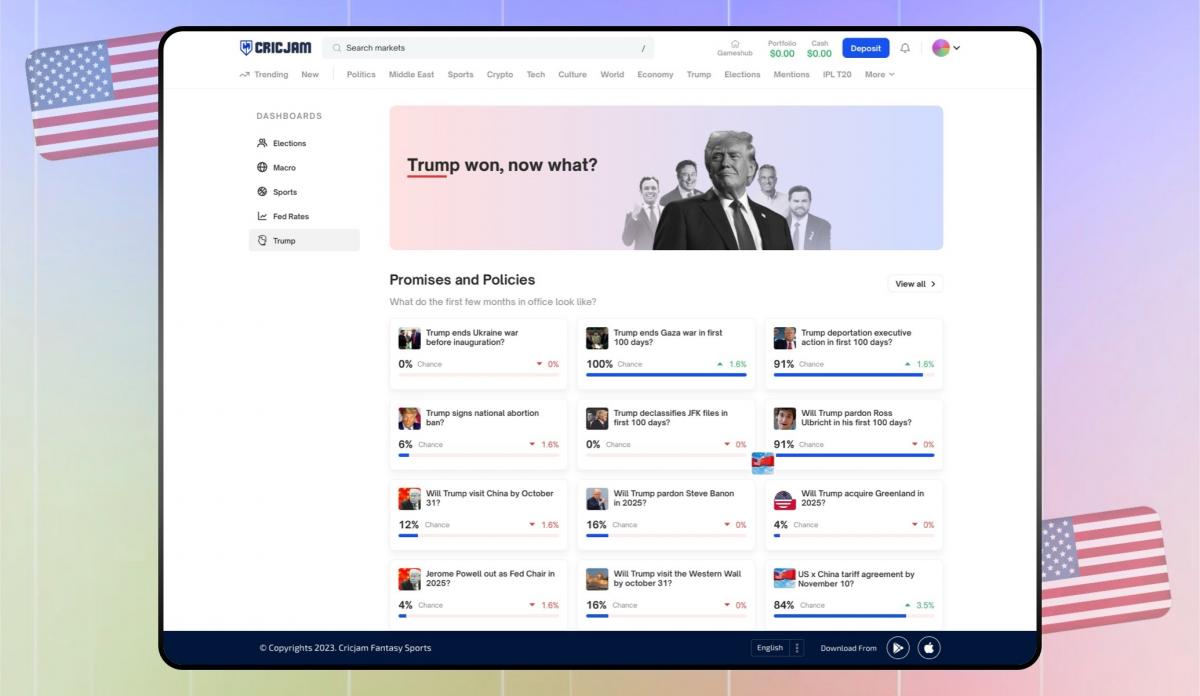
What serious buyers should actually look for in a US-ready prediction market platform
A serious buyer in this category should not evaluate a technology partner only on design quality or how quickly a demo can be shown. A proper evaluation is broader.
The first area is platform foundation. Does the provider already have a working prediction market product, or are they effectively starting from scratch? A team with a real base product usually brings faster iteration, stronger understanding of market workflows, and better judgment about edge cases that only appear in live trading environments.
The second area is customization depth. Can the platform be adapted for different market formats, contract categories, admin workflows, fee structures, user journeys, and reporting needs? Teams navigating the US market often discover that small operational details become very important. A rigid platform creates friction quickly.
The third area is control and ownership. Many firms want their own branded experience, their own business logic, their own analytics, and the ability to shape the platform as a long-term strategic asset. This is especially relevant for operators who do not want their future to be limited by another company’s roadmap.
The fourth area is technical readiness. This includes performance, stability, data architecture, order processing, wallet logic where relevant, notification flows, admin controls, and the ability to integrate identity, payments, geolocation, KYC, analytics, or external monitoring systems when required.
The fifth area is working style. In a journey that touches product, operations, legal review, compliance interpretation, and launch planning, the technology team must be able to collaborate closely with internal stakeholders and outside advisors. A vendor who only ships tickets is rarely enough. A proper partner listens, interprets operational realities, and helps the client translate them into software.
The difference between a generic vendor and a real technology partner
A generic vendor may be able to build screens, connect APIs, and package a demo. But that is not the same as supporting a serious prediction market launch.
A real technology partner understands that the client may still be refining core decisions. The product may need to evolve as conversations with advisors progress. Admin requirements may become more nuanced. The business may need different operational controls, market management tools, moderation workflows, role-based access, ledger visibility, reporting exports, or alerting systems. The team may need help thinking through what should be configurable and what should be hard-coded.
This is where experience in prediction market platform development matters. A team that has already spent time in this category usually understands the practical side of building exchange-like experiences, market admin systems, trading flows, wallet behavior, contract lifecycle management, settlement logic, and platform operations.
That kind of familiarity can save months of rework.
Why a strong base product changes the economics of the project
One of the biggest mistakes buyers make is assuming that every prediction market build is the same. It is not.
If the technology partner already has a strong base product, the conversation becomes more strategic. Instead of spending a large part of the budget reinventing the core, the team can focus on what really matters for the client’s business: product fit, controls, differentiators, integrations, user flows, operational readiness, and launch priorities.
This is especially important in the US market, where speed matters, but so does seriousness. Companies often want to move with intent rather than spend months proving basic concepts. A provider with a real base platform can usually help the client progress faster while still leaving room for customization and future expansion.
For buyers, this usually means better economics, lower execution risk, and a shorter path from concept to a working product environment.
Where Vinfotech fits in this journey
Vinfotech’s role is not to act as a legal or regulatory advisor. That is not the claim.
Our role is to be the technology partner for teams building toward a serious US prediction market offering.
We provide a strong base prediction market product and a dedicated team focused on this category. We can work with companies that want a more owned platform journey, and we can also assist teams that may begin with integration-led approaches but need more flexibility over time. The key point is that we are able to work alongside the client’s product leaders, legal advisors, compliance stakeholders, and operations teams so that the platform evolves in a practical and aligned way.
We have already worked with firms pursuing this path, which means we understand the technology side of what these journeys demand. We understand that once a team starts navigating CFTC requirements, the discussion is rarely abstract. It becomes about product controls, admin structure, trading logic, data visibility, reporting needs, integration points, and operational confidence.
That is where a dedicated prediction market engineering team can make a real difference.
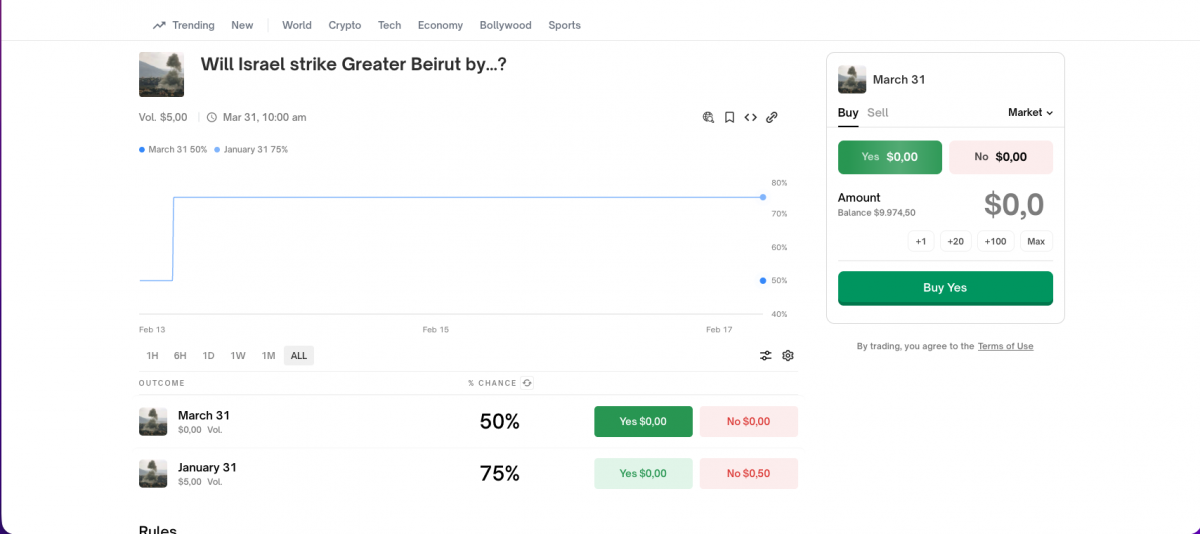
The technology side of a US-ready prediction market platform is broader than most people expect
Many first-time buyers underestimate how much needs to come together for a credible platform.
A US-ready prediction market platform is not only a matching engine or a set of market cards on a website. It usually involves a much broader system: user onboarding, identity layers, wallet and transaction logic, market management, role-based administration, contract lifecycle handling, settlement rules, notifications, market data display, ledger visibility, reporting, user support tooling, analytics, and controls for internal operators.
Then come the external pieces. Depending on the business model, a company may need integrations around KYC, AML, geolocation, payments, fiat or crypto workflows, CRM, support tools, market data vendors, or surveillance systems. Even when a client does not require every one of these elements on day one, the platform architecture should be able to accommodate them.
This is why partner selection should not be made only on the basis of a sales demo. The deeper question
is whether the provider can support the client’s journey for the next twelve to twenty-four months.
Flexibility is not a luxury in this category
In many software categories, flexibility is helpful. In prediction markets, it is often essential.
Teams entering the US market may need to refine contract structures, update market categories, change admin permissions, modify how fees are handled, improve reporting, introduce new workflows, add surveillance support, or evolve the customer experience as they learn from real usage and feedback. If the platform is too rigid, each change becomes expensive and slow.
This is one reason many serious buyers prefer working with a team that not only has a base product, but also has the engineering depth to customize it meaningfully. The ideal partner is not just selling a fixed template. They are providing a foundation that can adapt.
Building for long-term ownership, not just initial launch
The most thoughtful buyers in this category are not only asking, “How do we launch?” They are also asking, “What are we actually building over the next few years?”
That is the right question.
A prediction market platform can become an important business asset. It can shape user behavior, create differentiated market experiences, support proprietary workflows, and build enterprise value over time. That only happens when the company has enough control over the product direction.
For some teams, a lighter integration route may still make perfect sense as an entry point. But even then, it helps to think ahead. If the business gains traction, will the current setup allow deeper customization? Will it support your own operational model? Will it help you create a stronger product identity? Will you be able to shape the roadmap based on your business rather than someone else’s priorities?
Those are technology partner questions as much as they are business questions.
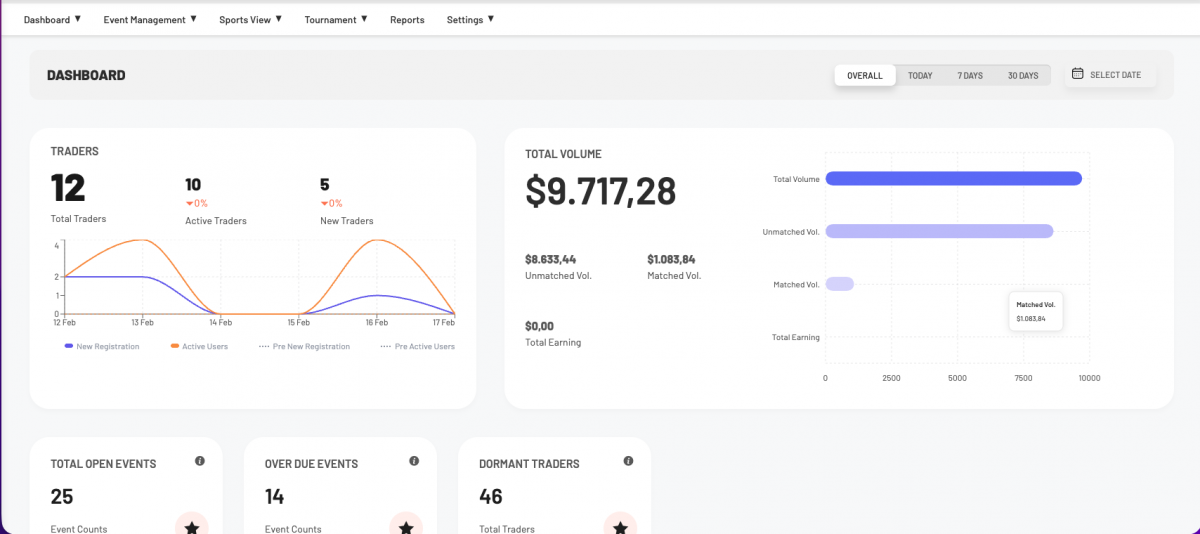
What a serious engagement with the right partner should look like
A serious engagement usually starts with alignment, not code. The partner should understand the client’s market ambition, operating model, team structure, target users, and intended route to market. From there, the discussion should move into product scope, platform gaps, integration needs, control requirements, reporting expectations, and launch sequencing.
The right technology partner should be able to say, with honesty, what already exists in the base platform, what can be configured, what should be customized, what needs to be built specifically for the client, and what decisions are better made after more input from legal or compliance advisors.
That kind of transparency is important. It keeps the project grounded and helps avoid both under- scoping and over-promising.
The right partner helps your team move with confidence
Companies entering the US prediction market space do not only need code. They need confidence that the platform can evolve as the journey evolves.
They need to know that the product will not break under the weight of new requirements. They need to know that the engineering team understands exchange-like workflows, market operations, admin realities, and the difference between a prototype and a serious product. They need to know that the technology partner can collaborate well with other stakeholders instead of becoming a bottleneck.
This is where the right prediction market software partner creates value beyond development hours. They reduce uncertainty. They help teams make better product decisions. They provide a foundation that is both practical today and extensible tomorrow.
Final thoughts
The US prediction market opportunity is large, but it is not a category where serious teams should think only in terms of speed or surface-level demos. When a company begins navigating CFTC requirements, partner selection becomes a strategic decision.
The best technology partner is not the one making legal claims. It is the one that brings a strong base product, practical category understanding, customization depth, and the ability to work closely with your internal team and external advisors.
If your company is exploring how to build a US-ready prediction market platform, Vinfotech can help from the technology side of that journey. We bring a dedicated prediction market team, a working product foundation, and experience supporting firms that are building seriously in this space.
For teams that want a technology partner capable of supporting both immediate execution and long- term platform ownership, that conversation is worth having.
Frequently asked questions
Is Vinfotech a legal or regulatory advisor for CFTC matters?
No. Vinfotech does not provide legal or regulatory advice. Our role is to support the technology, product, platform, and operational side of a serious prediction market build while clients work with the appropriate legal and compliance advisors.
Can Vinfotech help if a company starts with integrations first?
Yes. Some companies begin with integration-led approaches, and that can be a valid route. Vinfotech can assist teams that want to start there while also planning for more flexibility, customization, and platform ownership over time.
Does Vinfotech offer a base prediction market product?
Yes. We have a strong base prediction market platform and a dedicated team focused on this category. That allows us to move faster than a pure from-scratch build while still supporting meaningful customization.
What makes a platform more suitable for the US market?
Suitability depends on the company’s operating model and regulatory path, but on the technology side it usually involves strong product foundations, flexible workflows, admin controls, data visibility, reporting readiness, integration capability, and the ability to work alongside internal and external stakeholders.
Why not just choose the fastest available launch option?
Speed matters, but long-term flexibility matters too. Many serious operators eventually want greater product control, stronger customization, better internal tools, and a platform that can evolve with their business. That is why partner choice should be based on long-term fit, not only early speed.
What kind of companies should explore this route?
This route is most relevant for serious operators, brokerages, fintechs, media-led platforms, exchanges, and other businesses that want a meaningful role in the prediction market value chain rather than only a thin branded layer. It is especially relevant for companies thinking beyond launch and toward long-term platform ownership.
About Vinfotech
Vinfotech builds world-class prediction market solutions like Kalshi or Polymarket. Our proven core engine features battle-tested mechanics with AMM and order book support at a production-ready scale. Whether you need white label or full source code, we provide full customization to meet your specific compliance and operator needs. We also do enterprise prediction markets for internal forecasting. Contact Us today for a demo.

for subscribing to our newsletter.
What does it cost to build a prediction market platform in 2026? Discover pricing across white-label solutions...

Understand the difference between a prediction market and a betting platform in simple language. ...
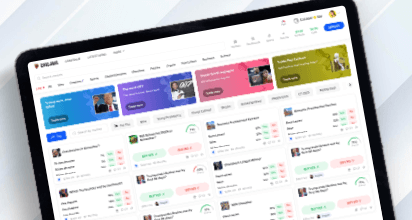
Launch your prediction market business with a white label platform. Get scalable, customizable prediction mark...

Discover why free-to-play prediction market games are becoming a powerful engagement layer for sp...


