Prediction Market vs Betting Platform: What’s the Difference?
Understand the difference between a prediction market and a betting platform in simple language. Learn how pricing, liquidity, user behavior, and market structure differ, and why prediction market platforms are gaining popularity.

When people first hear the term prediction market, they often assume it is just another name for a betting platform. On the surface, the two can look similar. In both cases, users put money on the outcome of a future event. A football team may win, a candidate may lose, a stock index may cross a level, or a celebrity event may happen.
But once you look a little deeper, the two models are quite different.
A betting platform is usually built around odds set by the operator or sportsbook. A prediction market platform is usually built around a market where prices move based on what participants are buying and selling. That difference changes how pricing works, how users interact, how liquidity is managed, and how the product feels overall.
In this guide, we will explain the difference between a prediction market and a betting platform in very simple terms, so that founders, operators, product teams, and curious users can understand the space clearly.
The simple one-line difference
A betting platform lets users place bets at odds offered by the platform.
A prediction market platform lets users trade on the probability of an event, with pricing often shaped by market activity.
If that still sounds technical, think of it like this:
A betting platform is usually closer to placing a wager.
A prediction market is usually closer to trading an event outcome.
What is a betting platform?
A betting platform is a system where users place wagers on pre-defined outcomes. This is most common in sports betting platforms, but the same structure can exist in other betting products as well.
For example:
-
Team A to win the match
-
Total score over 2.5 goals
-
Player X to score first
-
Team B to win by a certain margin
In a regular betting setup, the operator or sportsbook typically publishes the odds. Users then choose whether they want to bet at those odds.
How a betting platform usually works
-
The operator lists the event and available betting options.
-
Odds are assigned for each outcome.
-
A user chooses an outcome and places a wager.
-
If the outcome is correct, the payout is based on the odds that were locked in when the bet was placed.
-
If the outcome is wrong, the stake is lost.
This model is familiar, easy to understand, and especially popular in sports.
What is a prediction market?
A prediction market is a platform where people buy and sell positions based on whether they think a future event will happen.
Instead of only asking, “What are the odds being offered?”, the market asks, “What probability is the crowd giving to this event right now?”
For example:
-
Will Team A win this game?
-
Will Bitcoin be above a certain price by Friday?
-
Will a specific candidate win an election?
-
Will inflation be above a defined number next month?
-
Will a company launch a product before a certain date?
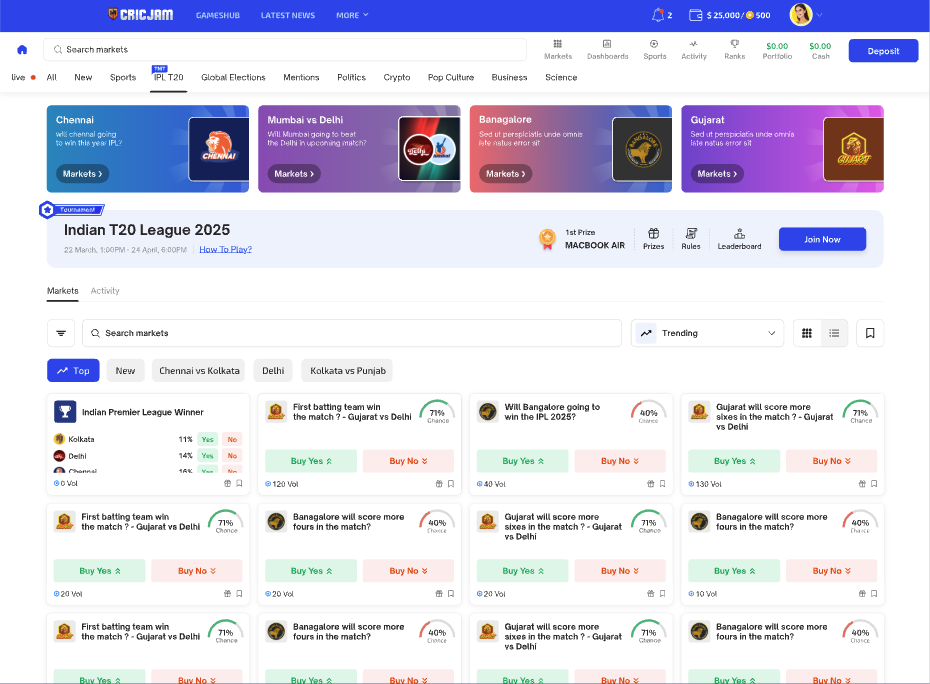
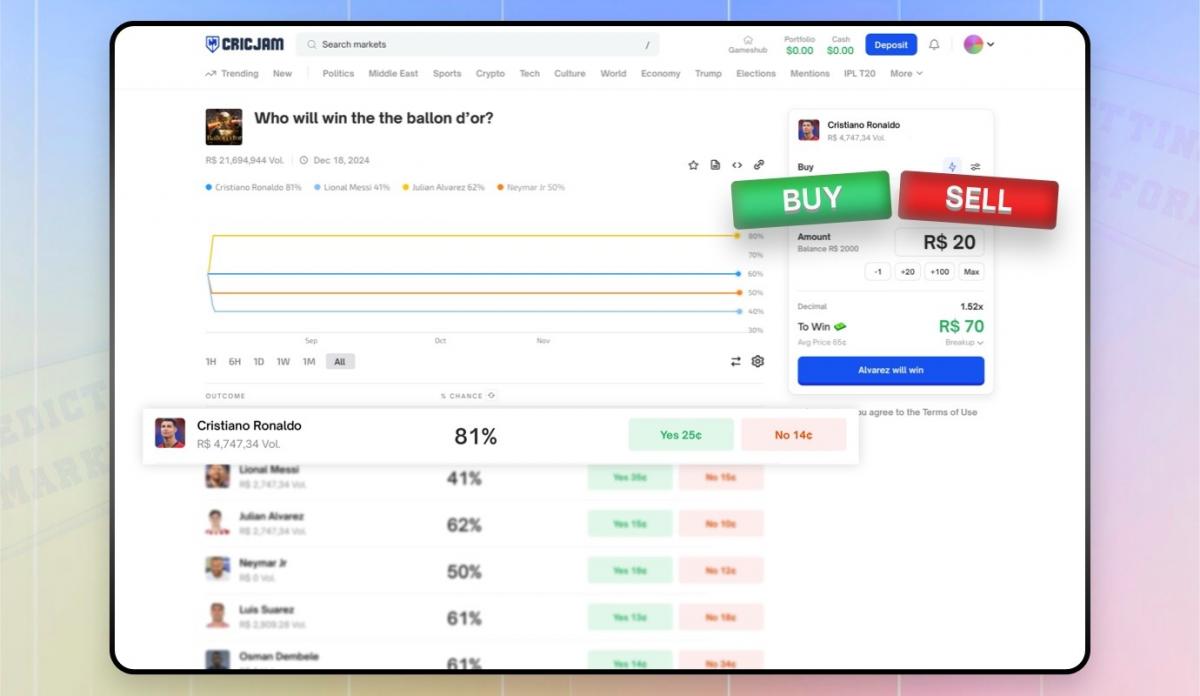
In many prediction markets, the price itself behaves like a live probability signal. If a contract is trading at 70, the market may be implying around a 70% chance of that outcome happening. If confidence drops, the price may fall. If confidence rises, the price may move up.
That is why prediction markets often feel closer to a live exchange than a traditional betting website.
Why people confuse the two
The confusion is understandable because both involve:
-
Future outcomes
-
Money at stake
-
Gain or loss based on the result
-
User activity around uncertain events
But the user experience, platform mechanics, and product philosophy can be very different.
A betting platform says:
“Here are the odds. Do you want to take this bet?”
A prediction market says:
“Here is what the market currently believes. Do you want to buy, sell, or take a position?”
That is a major difference.
Prediction market vs betting platform: the key differences
1. Odds vs market price
This is the biggest difference.
In a betting platform, odds are usually created and managed by the operator. They may move over time, but they are still essentially offered by the house.
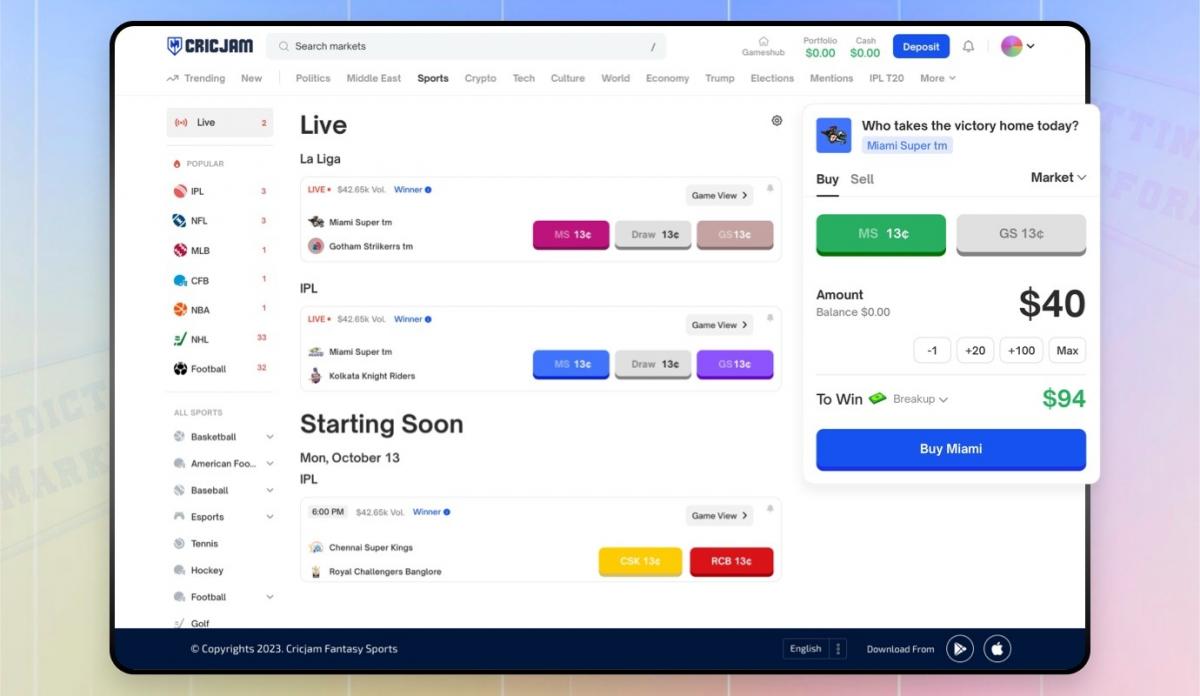
In a prediction market platform, price is often discovered through user activity. As buyers and sellers enter the market, the price changes. The platform may provide structure, liquidity support, or matching logic, but the market itself plays a central role in price discovery.
Simple example
On a betting platform, you may see:
Team A to win at 1.80 odds.
On a prediction market, you may see:
“Yes” trading at 64 and “No” trading at 36.
One is mainly presented as betting odds. The other is presented more like an event price or implied probability.
2. Betting against the house vs participating in a market
In most traditional betting systems, the user is effectively betting into a system controlled by the bookmaker or sportsbook.
In many prediction market systems, users are interacting with other market participants, directly or indirectly, through market mechanics.
That changes the psychological feel of the platform.
A betting platform feels like:
User versus sportsbook
A prediction market platform feels more like:
Trader versus market
This is one reason why prediction markets often attract users who enjoy market behavior, probabilities, and price movement rather than only fixed betting slips.
3. Static bet placement vs dynamic trading
A regular betting user often places a bet and waits for the outcome. A prediction market user may:
-
Enter early
-
Exit before resolution
-
Respond to live news
-
Adjust position size
-
Trade in and out multiple times
This makes prediction markets feel more active and continuous.
For some users, this is a huge advantage. It creates a product that is not just about waiting for the final whistle, but about reacting to information as it develops.
4. Event coverage can be much broader
A sports betting platform usually focuses heavily on sports, with structured bet types like moneyline, spread, total, props, or same-game combinations.
A prediction market platform can go beyond sports and include:
-
Politics
-
Economics
-
Finance
-
Crypto
-
Weather
-
Entertainment
-
Business events
-
Real-world milestones
This broader scope is one reason prediction market software has attracted attention from founders who want to build products outside the standard sportsbook model.
5. User mindset is different
Betting platforms often attract users who want a straightforward gambling experience. Prediction markets often attract a slightly different mix, including users who enjoy:
-
Forecasting
-
Probability thinking
-
Live information interpretation
-
Trading behavior
-
Market sentiment
-
Short-term conviction changes
Of course, there is overlap. But the product mindset is not exactly the same.
6. Liquidity works differently
Liquidity is one of the most important product questions in this space.
On a traditional betting platform, the user does not usually worry much about market liquidity in the same way. The operator sets the odds and accepts or limits the bet according to internal risk rules.
On a prediction market platform, liquidity is much more visible because users need a functional market. If nobody is willing to buy or sell, the market can feel empty.
That is why prediction market products often need thoughtful liquidity design, such as:
-
Market making logic
-
Matching engines
-
Dynamic pricing
-
Automated market maker models in some cases
-
Guardrails for early market stages
This is one of the core product design differences between prediction market software and a regular betting platform.
7. Price becomes information
A sportsbook line tells you what the operator is offering.
A prediction market price often becomes a public signal of collective belief.
That makes prediction markets interesting not only as transactional products, but also as information products. Even people who do not trade may still look at the market because the price itself is meaningful.
This is one of the most powerful ideas behind prediction markets. They do not just allow participation. They also surface a live forecast.
An easy analogy
If a betting platform is like buying a ticket at a fixed counter, a prediction market is like stepping into a marketplace where the price keeps changing based on what everyone else believes.
That is not a perfect analogy, but it helps explain why the two feel so different in practice.
Why prediction markets are getting popular
Prediction markets have become far more visible in recent years, and there are a few clear reasons why.
1. People like real-time probability
Modern users are comfortable with dashboards, live numbers, and market movement. A prediction market gives them a constantly updating signal instead of only a one-time bet confirmation.
That makes the experience feel more alive.
2. They combine trading, forecasting, and engagement
Prediction markets sit at the intersection of several behaviors:
-
Speculation
-
Forecasting
-
News consumption
-
Trading
-
Community sentiment
That combination is powerful. It turns an event into something users can follow, react to, and interpret continuously.
3. They can cover more than sports
A sportsbook is mainly tied to regulated betting categories, especially sports. Prediction markets can be relevant across many domains, which opens up more product possibilities.
For founders and operators, this means a prediction market platform can sometimes support a broader content strategy than a standard betting website.
4. They are highly engaging for informed users
In a normal betting platform, a user may place a wager and come back later.
In a prediction market, users may return repeatedly because the event narrative keeps changing. News, sentiment, volume, and price movement all give them reasons to check again.
This can create strong engagement loops when the product is designed well.
5. They feel modern
To many users, prediction markets feel like a modern internet-native product. The design language is often closer to trading apps than to old-style betting slips.
That matters because user perception influences adoption. A product that feels dynamic, data-driven, and interactive often stands out.
Are prediction markets replacing betting platforms?
Not exactly.
Betting platforms are still extremely strong, especially in sports. They are familiar, easy to understand, and deeply embedded in user behavior across many regions.
Prediction markets are not automatically replacing sportsbooks. Instead, they are expanding the landscape.
In some cases, a founder may choose one model over the other. In other cases, the most interesting product may include ideas from both worlds.
For example:
-
A traditional sportsbook may add more market-style trading experiences
-
A prediction market may include sports-focused contracts
-
A hybrid platform may use both order-book and automated liquidity approaches
So the future is not necessarily one versus the other. It may be a broader spectrum of event-based products.
Which one is better for users?
That depends on what the user wants.
A betting platform may be better if the user wants:
-
A simple and familiar experience
-
Clear odds and fixed payouts
-
Easy bet placement
-
Common sports betting markets
-
A lower learning curve
A prediction market may be better if the user wants:
-
A trading-style experience
-
Real-time price movement
-
The ability to enter and exit positions
-
Markets beyond sports
-
Live probability signals
-
A more dynamic, information-rich product
Neither model is universally better. They serve different product goals and slightly different user mindsets.
Which one is better for operators and founders?
Again, this depends on the business model, market, regulatory environment, and target audience.
A sports betting platform may make more sense if your goal is to serve a traditional sportsbook audience with familiar bet types and established player behavior.
A prediction market platform may be more attractive if your goal is to build a product around:
-
event trading
-
dynamic pricing
-
broader market categories
-
user-driven price discovery
-
deeper engagement around information and sentiment Product teams should also think about operational questions such as:
-
how markets will be created
-
how liquidity will be supported
-
how risk controls will work
-
how outcomes will be resolved
-
what kind of interface best suits the audience
These decisions are central when comparing prediction market software to betting platform software.
A note on regulation
This is an area where terminology can become confusing.
In different countries, the legal treatment of betting platforms, sports betting, event contracts, and prediction markets can vary significantly. In some places, a product may be seen mainly as gambling. In others, certain event-based contracts may be treated differently. In many markets, the legal position depends heavily on product design, market type, underlying event, and local rules.
That means anyone planning to launch a prediction market platform or betting platform should evaluate the legal and compliance requirements of the target region very carefully before going live.
So what is the real difference?
If we strip everything down to the simplest possible answer, it is this:
A betting platform is usually built around operator-defined odds and wager placement.
A prediction market platform is usually built around market-based pricing and event trading. That single difference affects almost everything else:
-
How the product looks
-
How prices move
-
How users behave
-
How liquidity is handled
-
How engagement builds over time
-
How wide the market categories can become
Final thoughts
The rise of prediction markets is not just about a new way to wager. It reflects a broader shift in how digital users engage with uncertainty, information, and live events.
People no longer only want to place a bet and wait. Many also want to interpret price movement, react to news, understand crowd sentiment, and participate in a live market.
That is why the conversation around prediction market vs betting platform has become so important.
If you are building in this space, the question is not only which model sounds more exciting. The real question is which model best fits your users, your market, your regulatory environment, and the type of engagement you want to create.
And for many modern platforms, the answer may not be purely one or the other. It may be about designing the right event-based experience with the right mechanics under the hood.
About Vinfotech
Vinfotech works with businesses exploring event-based products such as prediction market platforms, sports engagement products, and related custom software solutions. If you are evaluating how a prediction market differs from a betting platform from a product, technology, or implementation perspective, it can be useful to work with a team that understands both the business logic and the platform architecture behind these systems.
About Vinfotech
Vinfotech builds world-class prediction market solutions like Kalshi or Polymarket. Our proven core engine features battle-tested mechanics with AMM and order book support at a production-ready scale. Whether you need white label or full source code, we provide full customization to meet your specific compliance and operator needs. We also do enterprise prediction markets for internal forecasting. Contact Us today for a demo.

for subscribing to our newsletter.
What does it cost to build a prediction market platform in 2026? Discover pricing across white-label solutions...

Exploring the US prediction market opportunity? Learn what serious operators should look for in a...
Launch your prediction market business with a white label platform. Get scalable, customizable prediction mark...

Discover why free-to-play prediction market games are becoming a powerful engagement layer for sp...


